
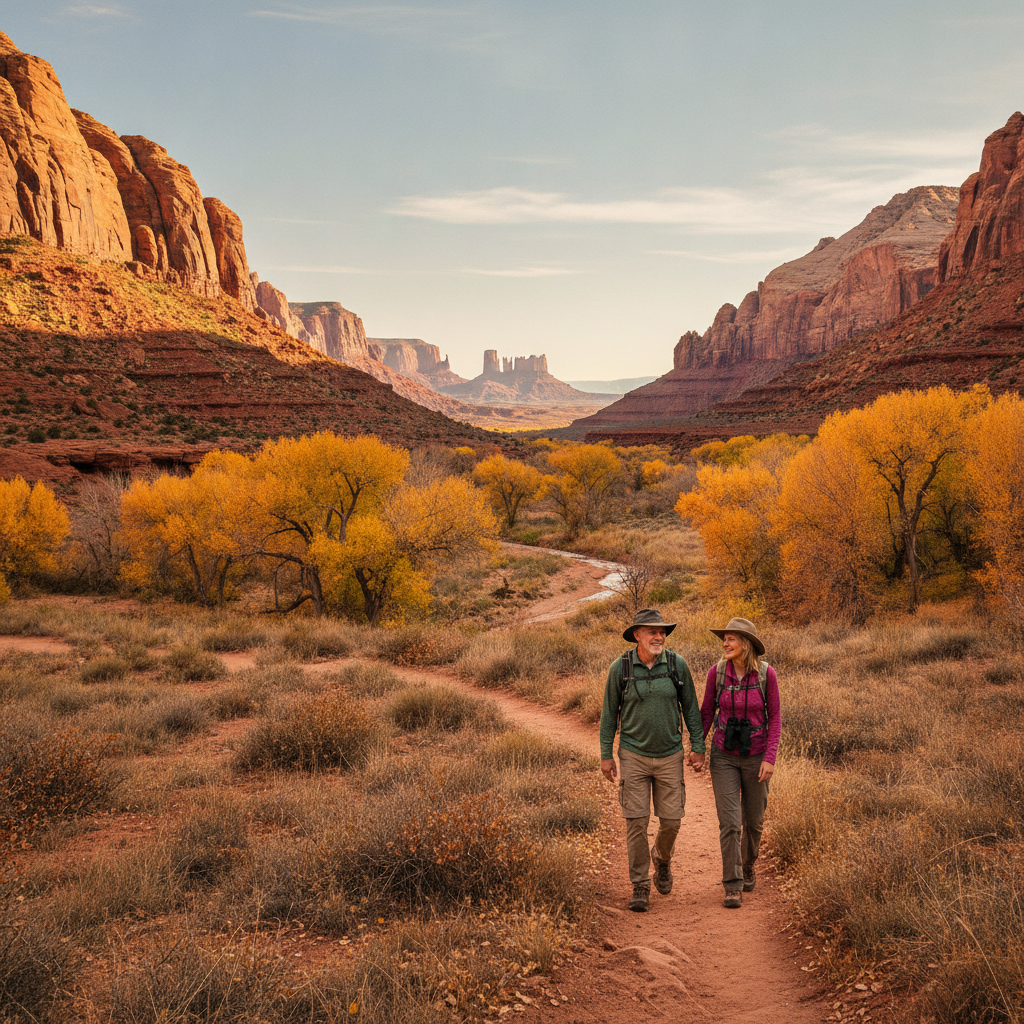
Why Fall Is the Smartest Season to Explore the American Southwest
The American Southwest has a way of stopping people mid-step — the kind of landscape where you look up at a canyon wall or across a desert plain and forget, briefly, whatever you were thinking about before. For older travelers, though, the timing of a visit matters almost as much as the destination itself. Summer heat in places like Arizona and Utah can be genuinely dangerous, crowds peak in spring and early summer, and prices follow accordingly. Fall changes all of that. From late September through November, the region becomes something close to ideal: cooler, quieter, and considerably more affordable than the busy season that precedes it.
What Makes Fall Different for Southwest Travel?
Temperature is the most immediate shift. Sedona, Zion National Park, and the Grand Canyon all sit at elevations that moderate fall heat significantly — daytime highs in October often land in the mid-60s to low 70s Fahrenheit, which is comfortable for walking, sightseeing, and spending time outdoors without the risk of heat exhaustion that defines July and August in the same places. Morning and evening temperatures drop further, which many travelers find pleasant, especially those who don't tolerate extreme heat well. There's also something qualitatively different about the light in autumn — lower, warmer, and more forgiving on both the eyes and the camera.
Crowds thin out noticeably after Labor Day. Families with school-age children have largely returned home, and the spring and summer tourist rush has passed. At popular sites like Bryce Canyon or the Antelope Canyon slot canyons near Page, Arizona, that difference is tangible. You're not waiting in long lines for shuttles, jostling for viewpoints, or booking accommodations months in advance just to get a room. For travelers who prefer a slower pace and don't enjoy navigating congested trails or packed visitor centers, fall offers something the peak season rarely does: breathing room.
How Does the Cost Picture Compare?
Hotel rates, tour prices, and even some airline fares shift meaningfully in the off-season. Properties that charge premium rates in May and June often drop considerably by October, particularly smaller inns, bed and breakfasts, and independently owned lodges that don't have the pricing power of large chains. Booking through platforms like Hotels.com or directly through a property's website often reveals the difference clearly — the same room that commands a peak-season rate in June may be available at a noticeably lower price in October. It's not a dramatic, advertised discount so much as a quiet return to normal pricing once the summer rush fades.
Rental car availability also improves in fall, which matters in a region where having your own vehicle gives you real flexibility. Many Southwest destinations are spread out, and relying solely on organized tours limits what you can see and when. Apps like Kayak make it straightforward to compare rental rates across companies at a given airport, and booking a week or two ahead rather than last-minute tends to lock in better pricing. For travelers on a fixed income who are watching every line of the budget, those savings across lodging, transportation, and dining — restaurants are less crowded, meaning more availability and occasionally better service — can make the trip genuinely more relaxed rather than just cheaper.
For national park access specifically, the America the Beautiful Senior Pass remains one of the best-value travel investments available to anyone 62 or older. A one-time purchase covers entrance fees at all federal lands, including the Grand Canyon, Zion, Bryce Canyon, Mesa Verde, and Saguaro National Park — a meaningful saving when parks that charge per-vehicle fees are on the itinerary. The pass can be purchased online through the U.S. Geological Survey store or at any park entrance.
What Should You Plan Around?
Fall in the Southwest isn't without its quirks. Afternoon thunderstorms can appear suddenly in September, a remnant of the region's monsoon season, though they typically clear quickly. Some higher-elevation areas — parts of the Kaibab Plateau above the Grand Canyon's North Rim, for instance — close to vehicle traffic in mid-October as the park service prepares for winter. Checking the National Park Service website for specific closure dates before finalizing an itinerary saves the frustration of arriving somewhere to find a road or facility closed. Planning around those details rather than against them is simply part of traveling thoughtfully.
For travelers who prefer structured itineraries over independent driving, fall group tours through companies like Tauck or Road Scholar often run Southwest itineraries in September and October specifically because the conditions are favorable. Road Scholar in particular caters to older adults and builds educational components into many of its programs — a format that suits travelers who want context for what they're seeing, not just scenic stops.
The American Southwest in fall rewards the kind of travel that doesn't rush. There's time to sit with a view, to walk a trail at an unhurried pace, to arrive somewhere before the midday heat builds and leave when the light turns golden. That quality of experience — calm, spacious, and grounded in something genuinely beautiful — is what makes fall the season worth planning around, and worth going for.