
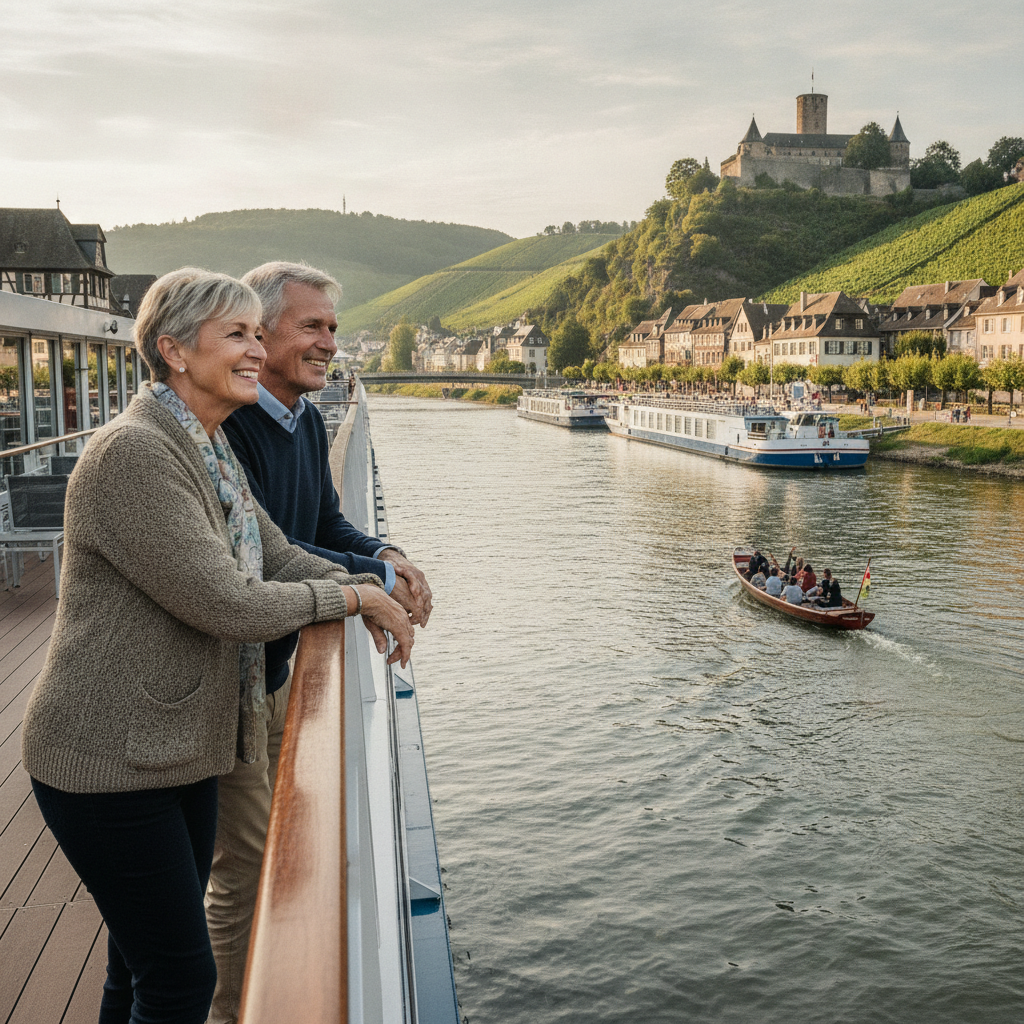
What River Cruising Offers Older Travelers That Ocean Cruising Typically Does Not
There is a certain kind of travel that suits the later chapters of life particularly well — unhurried, intimate, and anchored in the texture of real places rather than the spectacle of scale. River cruising has quietly become that kind of travel for many older adults, not because it is the easier option, but because it is, in many ways, the richer one. The differences between sailing a river and crossing an ocean go far beyond ship size, and for travelers in their sixties and beyond, those differences often matter quite a lot.
The Intimacy of Smaller Ships and Slower Pace
Ocean cruise ships are, by design, destinations unto themselves. With thousands of passengers aboard vessels like those in the Royal Caribbean or Carnival fleets, the experience can feel more like a floating resort than a journey through the world. River ships, by contrast, carry between one hundred and two hundred passengers on average, and that smaller scale changes everything. Dining becomes a real social occasion rather than a logistical exercise. Fellow travelers tend to be curious, well-traveled adults who share an interest in the places they're passing through. There is no waiting in long queues for tenders to shore, no crowds funneling through a gangway — you simply walk off the ship and into a town square. The pace of river travel is also measured and gentle. The ship moves at a walking speed in many stretches, and passengers can watch the banks of the Rhine, the Danube, or the Mekong shift from farmland to medieval village to vineyard without feeling rushed through any of it.
Waking Up in the Heart of a City
Perhaps the most practical advantage of river cruising for older travelers is where the ships dock. Ocean ships typically anchor at purpose-built cruise ports, often located well outside city centers, requiring tender boats or lengthy bus transfers just to reach the places worth seeing. River ships tie up directly along the embankment of cities like Cologne, Budapest, or Bordeaux, placing passengers within easy walking distance of the cathedral, the market, and the café where locals actually eat. For someone who finds long bus rides tiring or who prefers to move at their own speed, this matters enormously. There is a kind of freedom in stepping off a ship at seven in the morning, spending two hours wandering a medieval old town — what Europeans call an Altstadt, meaning literally "old city" — and returning to a quiet breakfast before the day has properly begun. That rhythm, unhurried and self-directed, suits many travelers far better than the compressed, scheduled excursions that ocean cruising typically demands.
Physical Accessibility Without Sacrifice
River ships are inherently more manageable for those who tire easily or have mobility considerations. The vessels are stable — river currents produce far less motion than open-ocean swells, meaning seasickness is rarely a concern. Cabins are close to common areas, and there are no sprawling decks to cross just to reach a meal or a lounge chair. Most reputable river cruise lines, including AmaWaterways and Uniworld, have invested significantly in accessible cabin designs, wider doorways, and shore excursion options that accommodate different physical needs. This doesn't mean river cruising is without physical demands — some excursions involve cobblestones, uneven terrain, or long walks — but the baseline experience is gentler, and the choices about how much or how little to do are genuinely available without social pressure to keep up.
Culture Absorbed Rather Than Visited
The design of river itineraries tends to favor depth over breadth. Rather than calling at eight ports in ten days with a few hours at each, a river cruise might spend two full days in Vienna or linger along the Douro Valley long enough for passengers to walk through working vineyards rather than simply photograph them from a bus window. This slower engagement allows something closer to genuine cultural absorption. There is time to sit in a square and watch the daily life of a place, to visit a museum without watching the clock, or to strike up a real conversation with a local guide. The concept of joie de vivre — the French phrase for a delight in living, in the small pleasures of a day — is perhaps easier to practice on a river ship than almost anywhere else in organized travel. For older adults who have moved past the urge to check destinations off a list, that distinction feels meaningful.
The Question of Value at This Stage of Life
River cruising is not inexpensive, and it's worth being clear-eyed about that. Per-night costs tend to run higher than comparable ocean cruises, though most river itineraries include more in the base fare — excursions, wine with meals, and sometimes gratuities are bundled in a way that makes comparison more honest than the sticker price suggests. For travelers on a fixed income, the predictability of that inclusive pricing has real appeal; it's easier to plan when you're not accumulating charges at every shore stop. Off-season departures — particularly in early spring or late autumn, when the crowds are thinner and the landscapes are dramatic in different ways — can bring fares down meaningfully. Travelers willing to book well in advance or to take advantage of last-minute availability through programs like those offered by Viking River Cruises sometimes find pricing that makes the experience accessible without strain.
There is a kind of travel that doesn't announce itself loudly, that doesn't promise the biggest, the fastest, or the most spectacular. It moves at the speed of a river, pauses in the middle of a city worth knowing, and offers the day back to you largely on your own terms. For many older travelers, that quieter form of discovery turns out to be the one they'd been looking for all along — and the one they return to, year after year, long after the ocean cruise has faded into a blur of buffet lines and distant ports.