
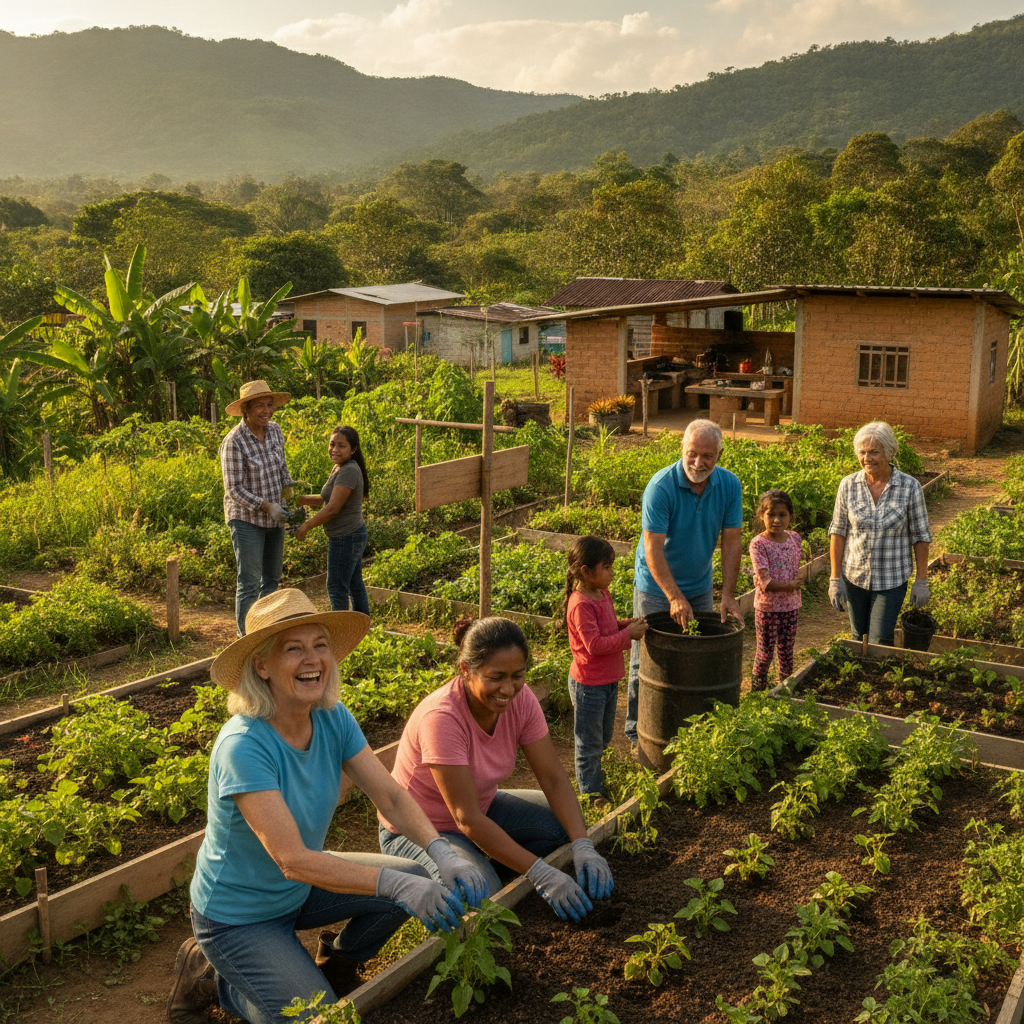
How Volunteering Abroad Through Structured Programs Gives Retirees Purpose, Community, and Low-Cost Travel
Retirement opens time that most people have never had before, and that abundance can feel disorienting. The calendar that once organized life around work schedules, school years, and professional obligations is suddenly empty in ways that feel both freeing and faintly unsettling. Many retirees find that leisure alone — however well-deserved — doesn't fully satisfy. What fills that gap is often something harder to plan for: a sense of contribution, of mattering to something beyond the household. Volunteering abroad through structured programs has become one of the more compelling answers to that question, offering a combination of purpose, belonging, and genuine low-cost travel that few other options can match.
When Travel Becomes More Than Sightseeing
Conventional tourism delivers scenery and comfort, but it keeps travelers at a certain distance from the places they visit. Volunteer travel — sometimes called voluntourism, though that term carries mixed associations — works differently. Participants live and work inside a community for weeks or months, often in small towns or rural regions that rarely appear on standard itineraries. The pace is slower, the relationships more genuine, and the experience of a place far more textured than what a guided tour provides. For retirees who have already done the highlights circuit, this depth is often exactly what they're looking for.
How Structured Programs Reduce the Burden of Planning
One reason older adults hesitate about volunteer travel is the logistics. Independent travel requires booking, researching safety, arranging accommodations, and navigating local systems — all of which can feel like more work than a retired person wants to take on alone. Structured programs handle most of that. Organizations like Projects Abroad, Earthwatch Institute, and Global Vision International manage housing, meals, in-country transportation, and project coordination. Participants pay a program fee that covers these essentials, which typically makes the total cost competitive with — or less than — a conventional package tour of similar duration. The infrastructure is already in place; the volunteer simply arrives.
The Economics of Volunteer Travel for Fixed-Income Retirees
The financial model of volunteer programs rewards longer stays. A two-week commitment often costs less per day than one week because fixed costs — orientation, airport transfers, initial setup — are spread across more time. Many programs in regions like Southeast Asia, Central America, and parts of East Africa run on modest budgets by local standards, which means the fee covers a meaningful level of support without the premium pricing of luxury travel. Volunteers are typically housed with local families or in shared program housing, which keeps costs low and cultural immersion high. This isn't budget travel in the sense of sacrifice — it's simply a different allocation of resources, one that tends to leave participants feeling the money was well spent.
Voluntarismo and the Culture of Giving Back
In many of the countries that host these programs, community service carries deep cultural weight. In Latin America, the concept of voluntarismo — a tradition of communal effort and civic participation — runs through local life in ways that parallel what many older volunteers felt during their own working years through church groups, civic organizations, or neighborhood associations. In East Africa, harambee (a Swahili term meaning "all pull together") describes a longstanding tradition of collective contribution. Arriving in a community with that cultural context in mind shifts the experience considerably. Volunteers aren't outsiders delivering charity — they're joining an ongoing effort, which is a more comfortable and accurate way to understand the relationship.
The Social Architecture of Program Life
One of the quieter benefits of structured programs is the social structure they create. Volunteers are placed with other participants — often a mix of ages, though retirees increasingly make up a substantial share — and that shared project creates fast, genuine connection. Working alongside others toward a concrete goal, whether it's building a school library in rural Guatemala or monitoring marine ecosystems off the coast of Madagascar, produces the kind of easy camaraderie that's hard to manufacture in ordinary social settings. For retirees who've found that their professional networks dissolved with retirement, this kind of ready-made community can feel like a genuine gift. The friendships formed during these programs often outlast the trip itself.
Choosing a Program That Matches Your Capacity
Physical demands vary considerably across programs, and reputable organizations are transparent about what each project requires. Wildlife monitoring programs through Earthwatch, for example, often involve moderate physical activity — walking field transects, collecting samples — suited to adults who are reasonably active but not looking for athletic challenges. Teaching or mentoring programs in community schools are largely sedentary. Conservation projects in cooler highland climates carry fewer heat and stamina concerns than fieldwork near the equator. When you're evaluating programs, ask specifically about daily physical demands, housing accessibility, and medical support available in the region. Most well-run programs will answer those questions directly and honestly.
Taking the First Step Toward Something That Matters
If this kind of travel has appealed to you in a general way but never moved past the idea stage, the practical entry point is simpler than it might seem. Start by identifying what kind of work feels meaningful — teaching, conservation, community construction, healthcare support — and search within that category. Programs like those offered by Habitat for Humanity's Global Village arm allow first-timers to join short two-week builds in countries across Latin America and Asia, with enough structure to feel safe and enough immersion to feel real. Read the program reviews written by older participants specifically; their observations about physical demands and social dynamics will be more useful than general marketing language.
Retirement offers a rare kind of freedom — the freedom to spend time on something that asks something of you in return. The retirees who seem most settled in this stage of life are often the ones who found a way to stay useful, to keep learning, and to remain genuinely connected to the world around them. Volunteer travel, done through a program that fits your health, interests, and budget, is one of the more honest paths toward all three.