Simple Home Modifications That Reduce Fall Risk Without a Full Renovation
Falls are the leading cause of injury among older adults, and the majority happen at home — often in familiar spaces people have moved through for years without a second thought. The good news is that reducing your risk doesn't require a contractor, a major budget, or months of disruption. A handful of targeted changes, most of them inexpensive and easy to install, can make your home significantly safer and more comfortable as you age in place.
Clear the Paths You Use Most
Start by walking through your home the way you actually use it — early morning, lights low, maybe just out of bed. Notice where you reach for walls, where rugs shift underfoot, where cords cross the floor. The goal isn't to strip your home bare but to create clear, unobstructed routes between the rooms you use most: bedroom to bathroom, kitchen to living room. Removing a single throw rug or repositioning a side table can eliminate a hazard you've been stepping around for years without realizing it.
Add Grab Bars Where They Actually Help
Grab bars are one of the most effective fall-prevention tools available, and they've become far less institutional-looking than they used to be. Brands like Moen and Franklin Brass make bars in brushed nickel and matte black finishes that blend naturally with bathroom hardware. The most important placement is beside the toilet and inside the shower or tub. A properly anchored grab bar — installed into wall studs or with toggle anchors rated for the load — provides a reliable handhold when you need it most. This is one modification worth having a handyman install correctly if you're not comfortable with the process.
Replace Dim Bulbs Throughout the House
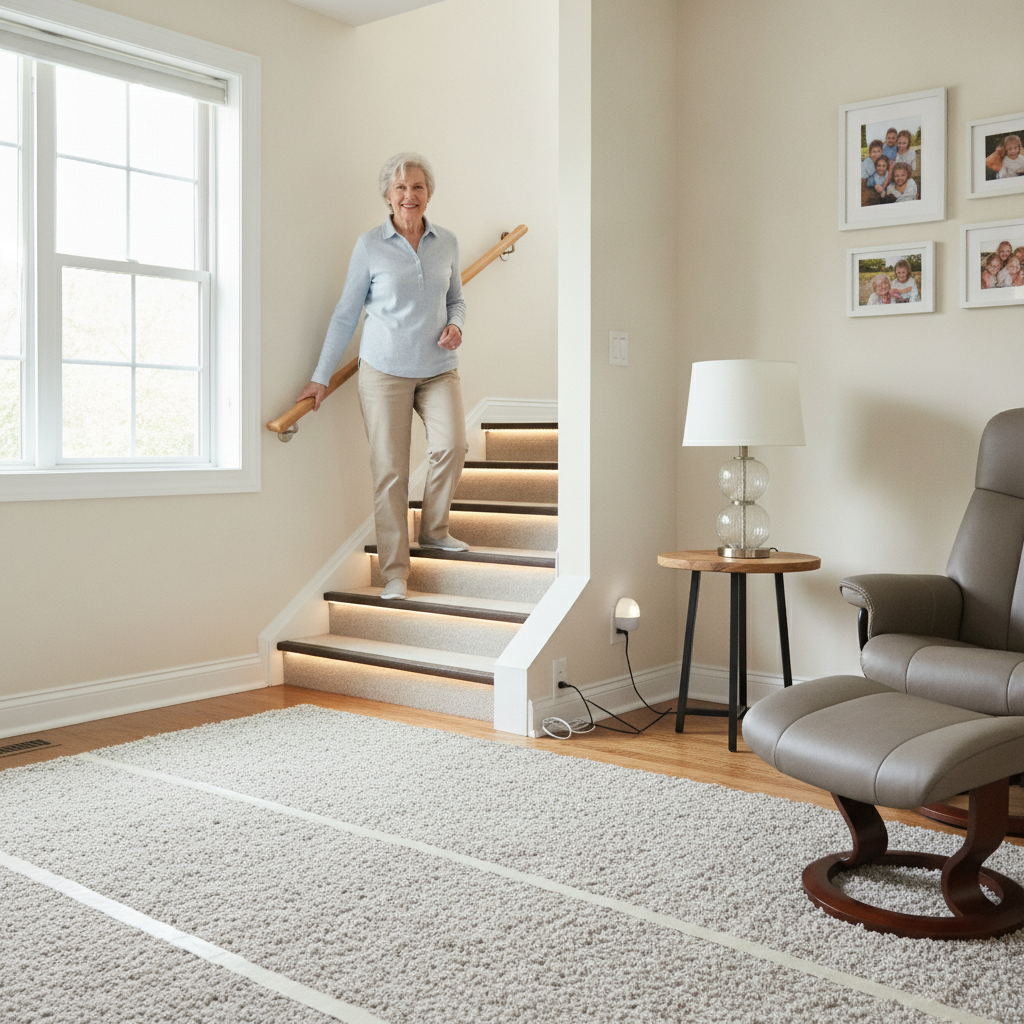
Poor lighting is one of the most overlooked fall risks in older homes. Eyes change with age, and spaces that felt adequately lit at 45 can feel genuinely dim at 65. Replacing standard bulbs with brighter LED options — particularly in hallways, stairwells, and the bathroom — costs very little and makes an immediate difference. Motion-activated night lights along the path from bedroom to bathroom are especially useful, so you're never fumbling for a switch in the dark. A few of these placed strategically can change how confidently you move through the house at night.
Secure Every Loose Rug in the House
Throw rugs cause more falls than most people expect. They bunch, slip, and catch toes in ways that are hard to anticipate. The simplest solution is to remove any rug that isn't truly necessary. For those you want to keep — an entry mat, a kitchen runner — use double-sided carpet tape or a non-slip pad underneath, and check regularly that the edges aren't curling. Avoid placing rugs at the top or bottom of stairs, in front of the shower, or anywhere the floor transitions between surfaces. These are exactly the spots where a misplaced step is most likely.
Install a Handrail on Both Sides of the Stairs
Many homes have a railing on only one side of a staircase, which means you're unprotected on the return trip. Adding a second handrail on the opposite wall is a relatively straightforward project and provides support regardless of which direction you're moving. Make sure existing railings are firmly anchored — give each one a firm pull to test it. If there's any wobble, tighten the mounting hardware or have it inspected. Stairs become significantly safer when you can rely on a solid grip on either side, and this change tends to give people a noticeable boost in confidence going up and down.
Raise Toilet Height With a Simple Seat Riser
Lowering yourself onto and rising from a standard toilet puts real strain on your knees, hips, and core — and it's one of the situations where loss of balance is most common. A raised toilet seat, available at any home improvement store or through brands like Drive Medical, adds several inches of height without any installation. Some versions include armrests for added support. This is a small change that makes a meaningful difference in daily comfort, particularly for anyone dealing with arthritis, hip tightness, or recovering from a joint procedure.
Put Frequently Used Items Within Easy Reach
A surprising number of falls happen when people reach for something stored too high or too low — stretching for a shelf, bending into a cabinet near the floor, or stepping onto a stool to reach the top of a closet. Reorganizing your storage so that everyday items sit between waist and shoulder height removes the temptation to overreach. Move things you use daily to more accessible spots, and if you do need to reach up occasionally, use a step stool with a grip handle rather than a chair or an unstable surface. Small adjustments to where things live can quietly eliminate several daily risks.
Consider Non-Slip Flooring in Wet Areas
Kitchen and bathroom floors become genuinely slippery when wet, and standard tile offers very little traction. Adding non-slip adhesive strips inside the shower — products like 3M Safety-Walk are widely available and easy to apply — provides traction underfoot without altering the look of the space. For bathroom floors, a bath mat with a suction-cup backing is more reliable than a standard cotton rug and easier to launder. These aren't glamorous changes, but they address one of the most common physical environments where falls occur.
Check the Garage, Porch, and Entry Steps Too
Indoor falls get most of the attention, but transitions between inside and outside carry their own risks. Uneven porch steps, a cracked walkway, poor lighting over the garage entry, or a single step down from an exterior door without a handrail — these are common situations that catch people off guard. Walk the exterior of your home with the same critical eye you'd use inside. Add an exterior handrail if one is missing, replace any cracked concrete near the entry, and make sure your porch and driveway are well lit after dark. Motion-sensor lights are an inexpensive and low-maintenance option that work reliably over time.
None of these changes require a renovation permit or weeks of disruption. Most can be done on a weekend, a few at a time, starting with the areas you use most. Picking even two or three of these modifications and getting them done this month puts you meaningfully ahead — and gives you the kind of quiet confidence that comes from knowing your home is working with you, not against you.