How Retirees Are Sharing Homes to Cut Costs and Stay Rooted in Their Communities
Housing has always been more than a financial decision — it carries the weight of identity, routine, and belonging. For many retirees, the home they've lived in for decades is also the neighborhood where they know the barista by name, the park where they walk each morning, and the community they built carefully over a working lifetime. As retirement income tightens and housing costs remain persistently high, a growing number of older adults are choosing arrangements that let them stay in place not by downsizing and moving elsewhere, but by sharing what they already have — or joining what others have built.
The Quiet Return of Shared Living
House-sharing among older adults is not a new idea, but it carries fresh relevance in the current climate of rising property costs and heightened awareness around social isolation. The basic model is straightforward: two or more unrelated adults share a home, splitting costs like rent or mortgage, utilities, and sometimes groceries, while maintaining separate private spaces. What's changed is how deliberately and creatively retirees are approaching the arrangement. Matching services like Silvernest — a platform specifically designed for adults over 50 — have helped normalize the process, removing some of the awkwardness of finding a compatible housemate the old-fashioned way. The arrangement appeals across a wide range of circumstances, from those who own a home with unused rooms to those seeking affordable housing in cities where renting alone has become a genuine strain.
The financial logic is compelling on its own. When housing-related expenses are shared between two people, the monthly burden can shift meaningfully — not in dramatic, headline-grabbing ways, but in the steady, cumulative sense that matters most when you're managing a fixed income. A retiree who owns a home outright might generate supplemental income from a housemate without taking on the complexities of becoming a traditional landlord. One who rents in a walkable urban neighborhood like Portland's Hawthorne district or Philadelphia's Chestnut Hill might find that sharing a two-bedroom apartment is the difference between staying in the neighborhood they love and being priced out of it entirely. The financial benefit is real, but for many, it's secondary to something harder to quantify.
Connection as a Practical Priority
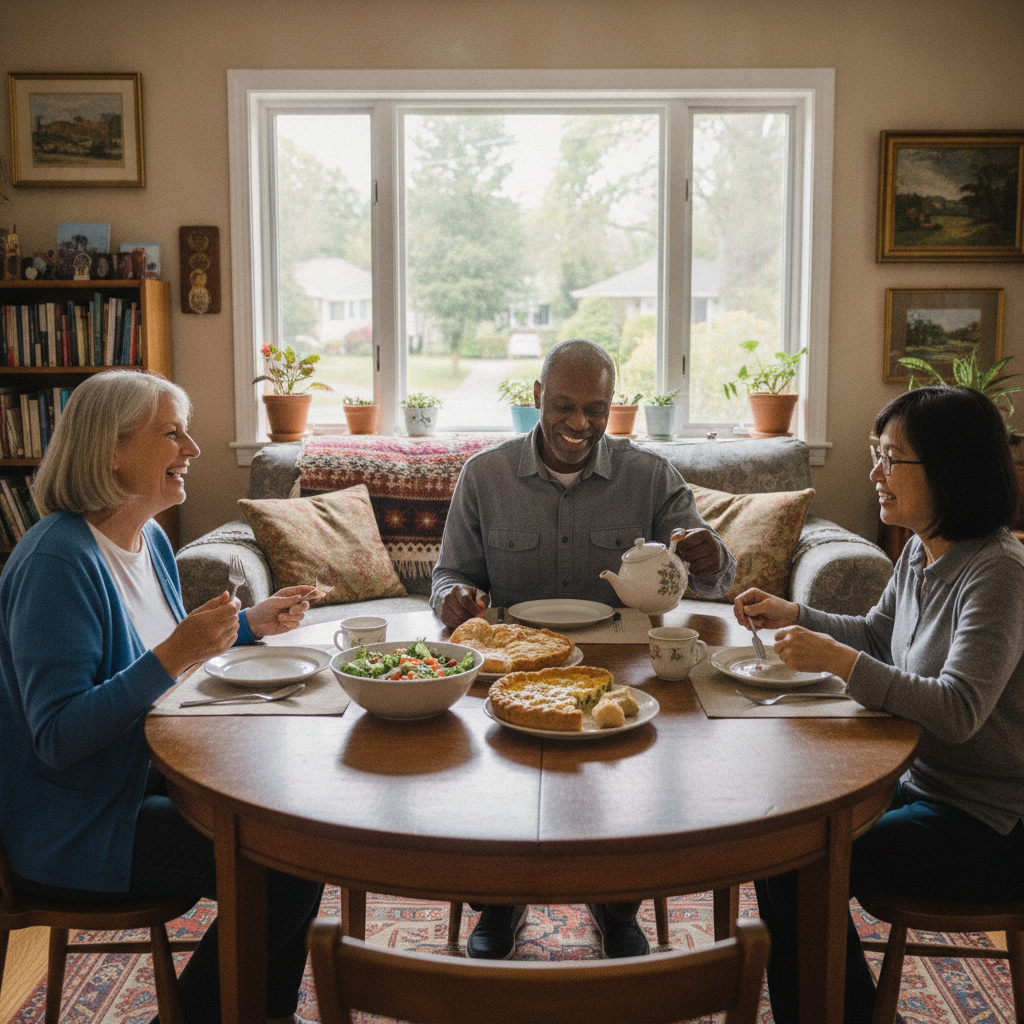
Loneliness in later life is not a soft or peripheral concern. It has measurable effects on physical health, cognitive sharpness, and overall wellbeing — effects that can be as disruptive to retirement as financial instability. This is part of why house-sharing has attracted serious attention beyond the personal finance space. Shared living, when it works well, builds a low-stakes structure of daily human contact: someone to eat breakfast near, someone who notices if you haven't come downstairs, someone whose rhythms and routines create a mild but meaningful form of social texture. This isn't the same as deep friendship, and it doesn't need to be. The value lies in the everyday presence, not the intimacy.
For retirees who've watched their social networks thin — through the deaths of friends, the relocation of adult children, or the abrupt disappearance of work-related community — this kind of ambient connection can matter enormously. The arrangement also tends to keep people rooted in neighborhoods they might otherwise have to leave, preserving access to the social infrastructure they've spent years building: the library, the farmers' market, the doctor who's known them for a decade, the faith community they've attended for longer than they can easily remember.
Finding the Right Match
The practical success of any house-sharing arrangement depends heavily on compatibility — not just in lifestyle preferences, but in expectations around noise, guests, shared spaces, and household contributions. Platforms like Silvernest and the National Shared Housing Resource Center facilitate structured matching processes that encourage honest conversations about these specifics before anyone commits to anything. Some retirees also work through local nonprofit housing programs that offer guided agreements and occasional mediation support, which can ease tensions before they become genuine conflicts.
The arrangement works best when both parties enter it with clear, written understandings — not because trust is absent, but because clarity tends to protect relationships rather than undermine them. A simple housemate agreement covering rent splits, guest policies, quiet hours, and shared versus private spaces removes the need for difficult conversations later. Treating it with the same seriousness one would give any significant financial arrangement is not overcaution; it's what tends to make these situations last.
Staying in the Place You Know
There's something worth sitting with in the appeal of staying put. For retirees who've built a life in a particular place — who know which coffee shop has the best light in the morning, which neighbors will water the plants, which walking path feels most like home — the prospect of relocating carries real emotional costs that don't always show up in financial comparisons. House-sharing offers a path that preserves both the practical and the personal: a way to reduce expenses without abandoning the community that gives daily life its texture and meaning.
This kind of arrangement won't suit everyone, and it asks genuine flexibility of those who try it. But for those who approach it thoughtfully, with compatible housemates and clear agreements, it can do something that many retirement strategies don't: keep people connected to the places and routines that make life feel like their own. Housing, after all, has always been more than a financial decision.